Piyoka
Hallo!Dutch

A little town where kids pick up a new language

Follow the chick to the ice cream shop, the bakery and the zoo. Tap things to hear their names, order an ice cream, then run the shop yourself. For young children learning Dutch, English or Japanese, with everything explained in their own language.

Coming soon to:

iPadiPhoneAndroidWeb
🍦 πŸ“ 🐢
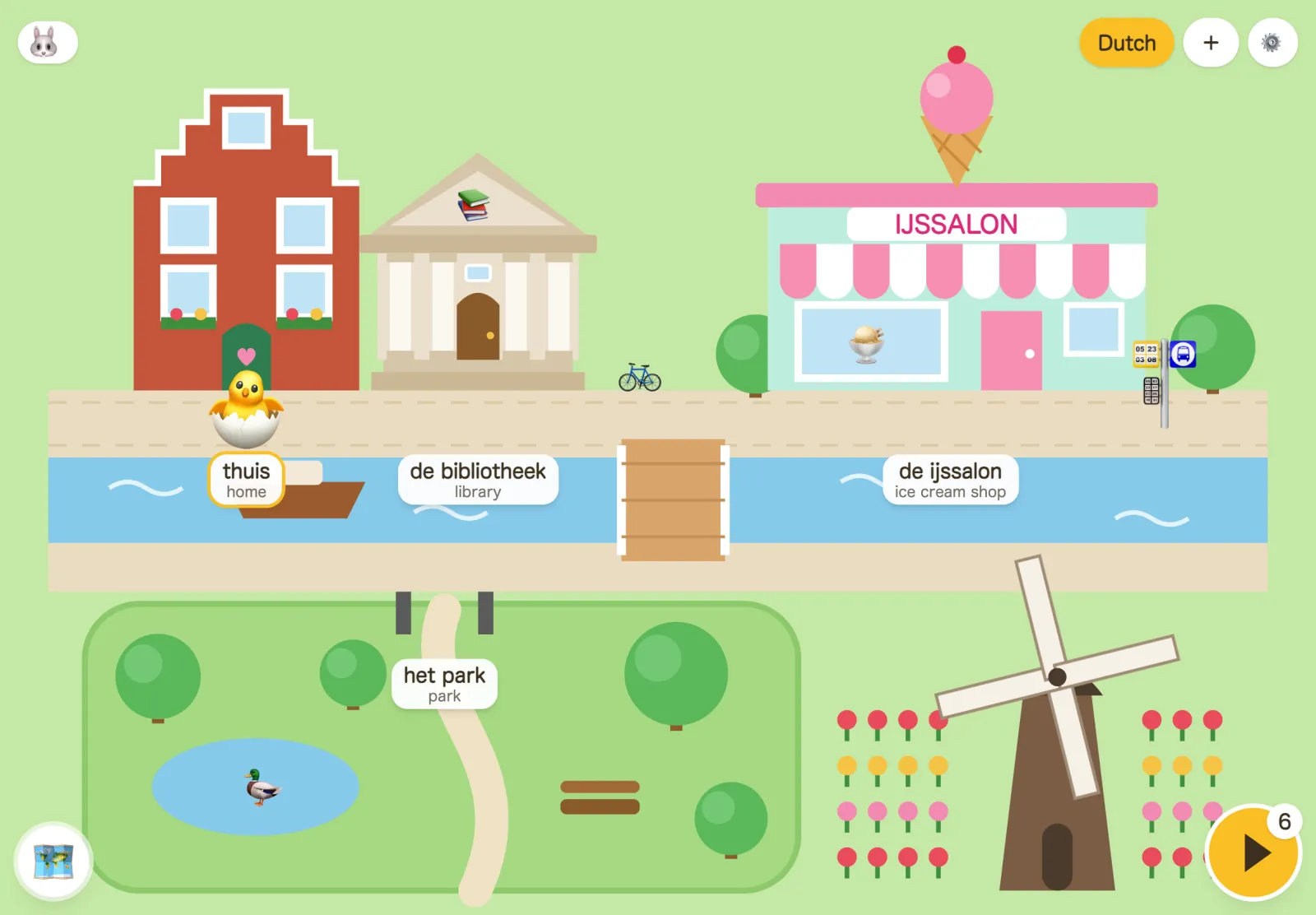
Piyoka's Dutch town: a canal, a stepped-gable house, a library, an ice cream shop, a park and a windmill, with the chick on the quay
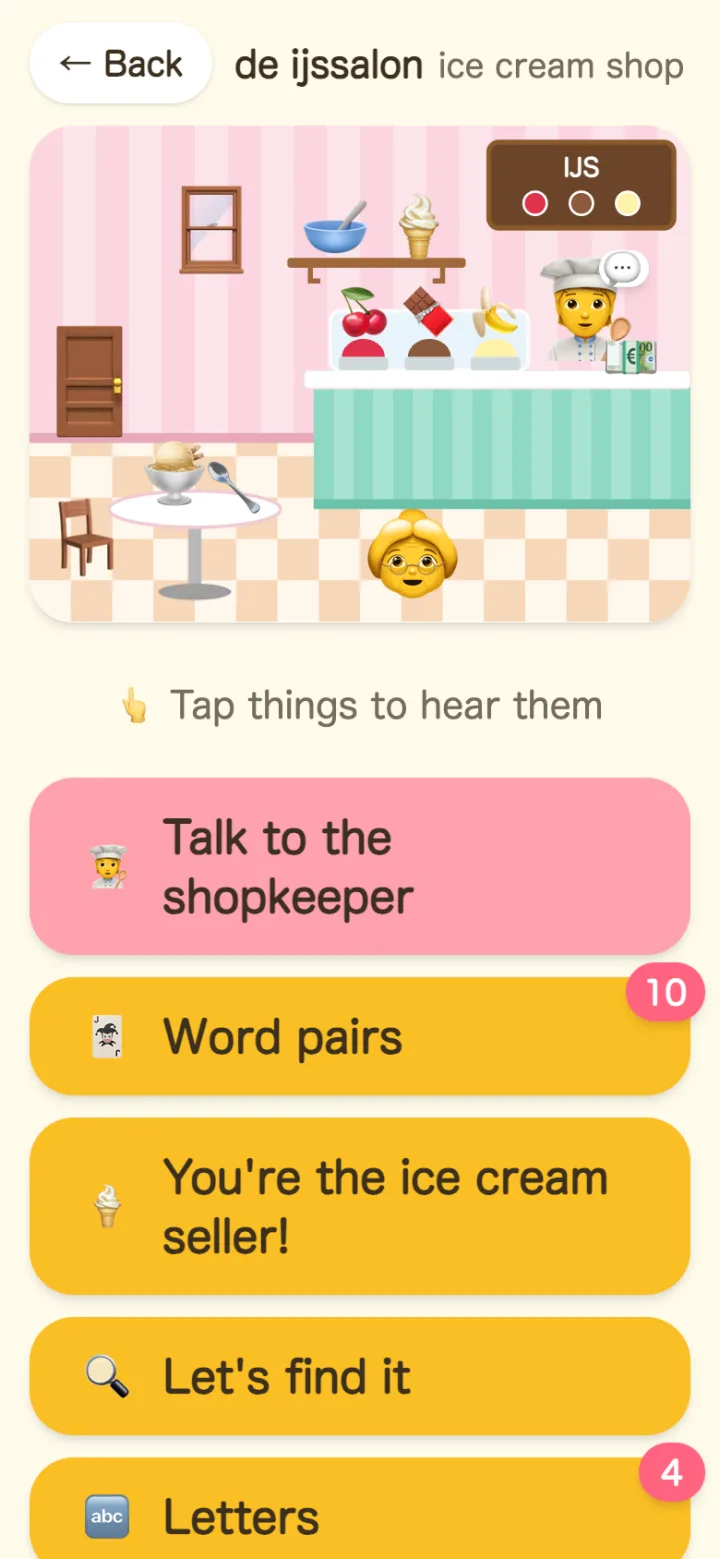
Inside the ice cream shop: tap things to hear them, then talk to the shopkeeper or play games
πŸ—ΊοΈ One town per language

Every language gets its own town

The town looks like where the language is spoken, so a word comes with a place to remember it in.

🍦 A visit to the ice cream shop

Play first. The words come along.

Each place in town is a little world to poke at. Every visit is a bit different: a flavour sells out, it's the shopkeeper's birthday, it starts to rain.

The ice cream shop scene with strawberries, chocolate, a dog and the shopkeeper
Look around

Tap anything to hear it

The cone, the spoon, the dog under the counter. Each one says its name.

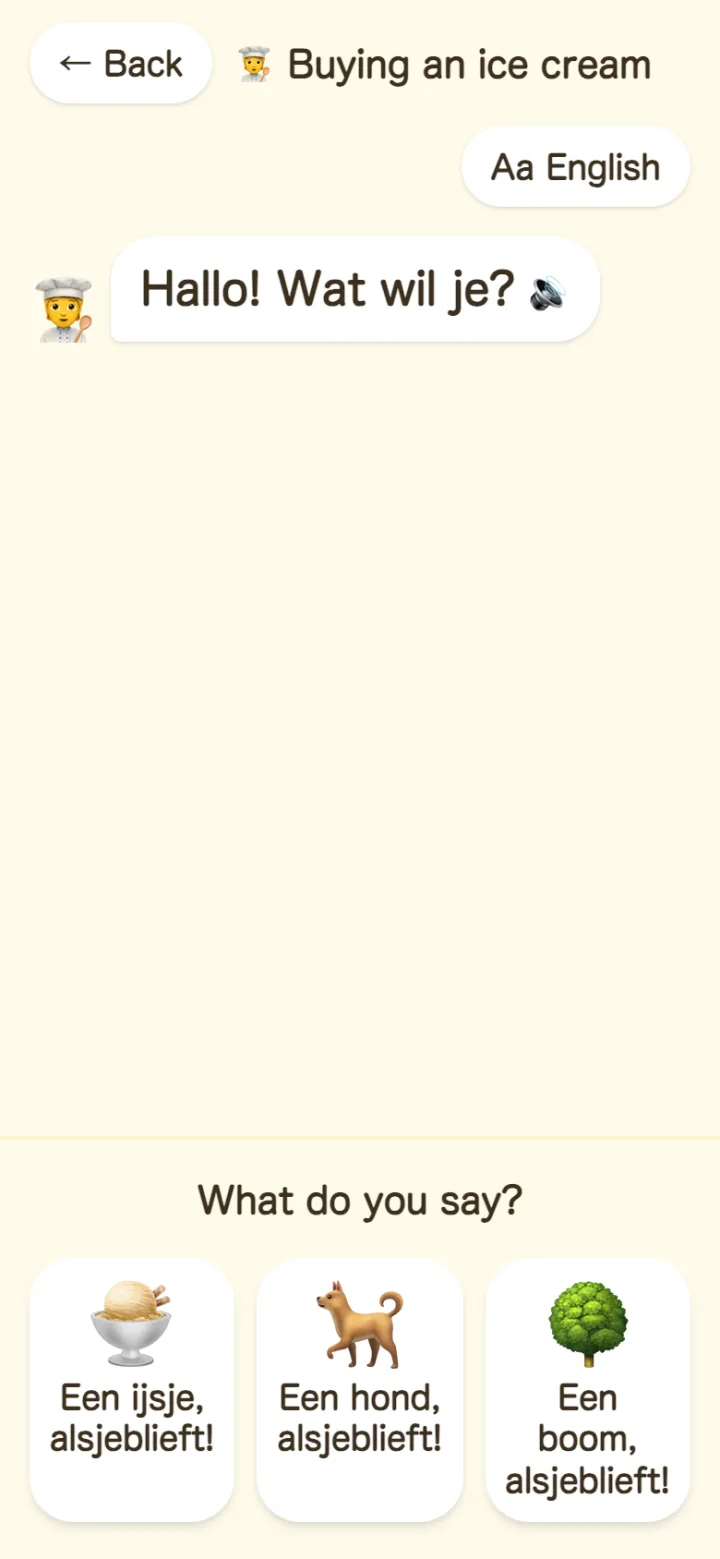
A conversation: the shopkeeper asks what you want, and three replies to choose from
Talk

Order an ice cream

Pick a reply, hear it, then say it out loud. Ask for a dog instead? You'll get a funny answer.

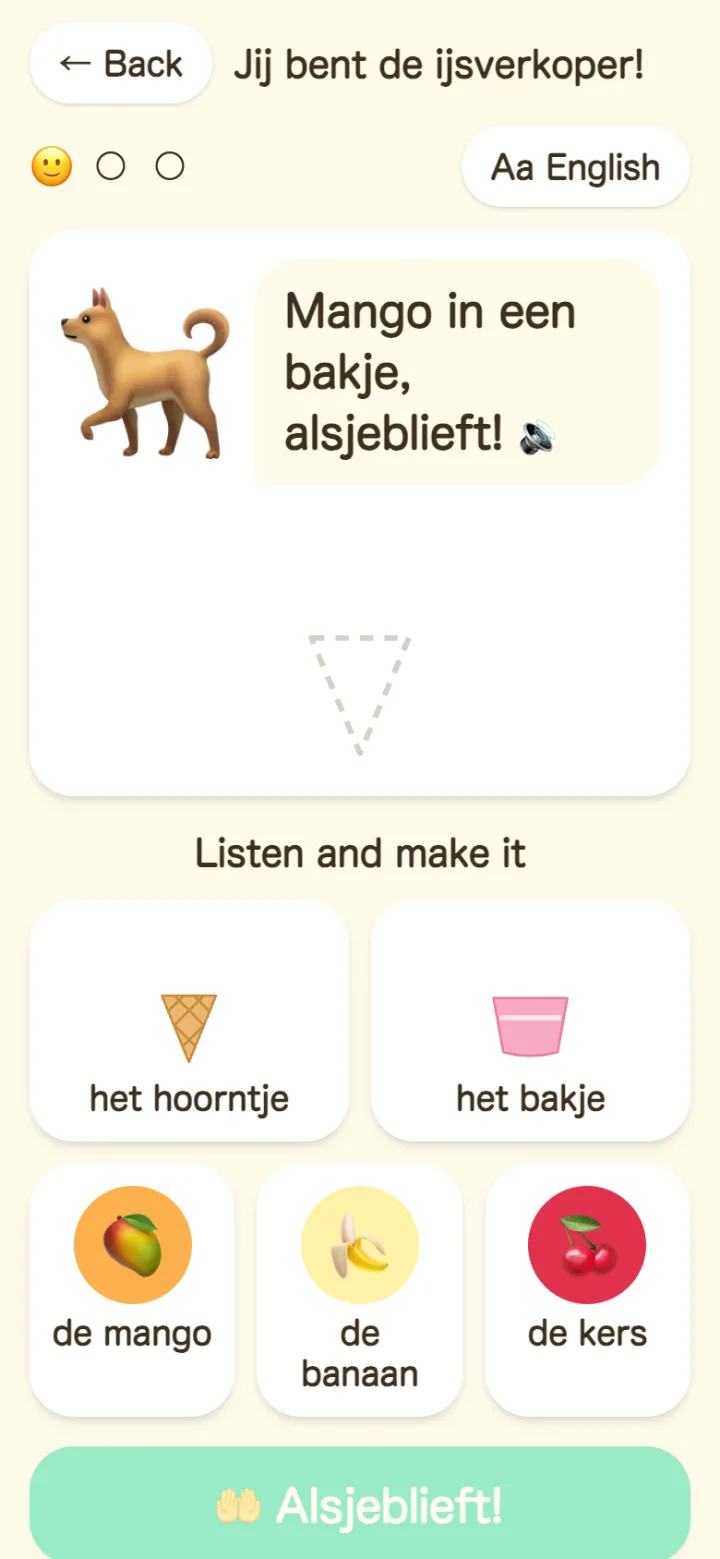
You're the ice cream seller: a customer asks for mango in a cup
Role play

Now you run the shop

A customer asks for mango in a cup. Listen, build it, hand it over: "Alsjeblieft!"

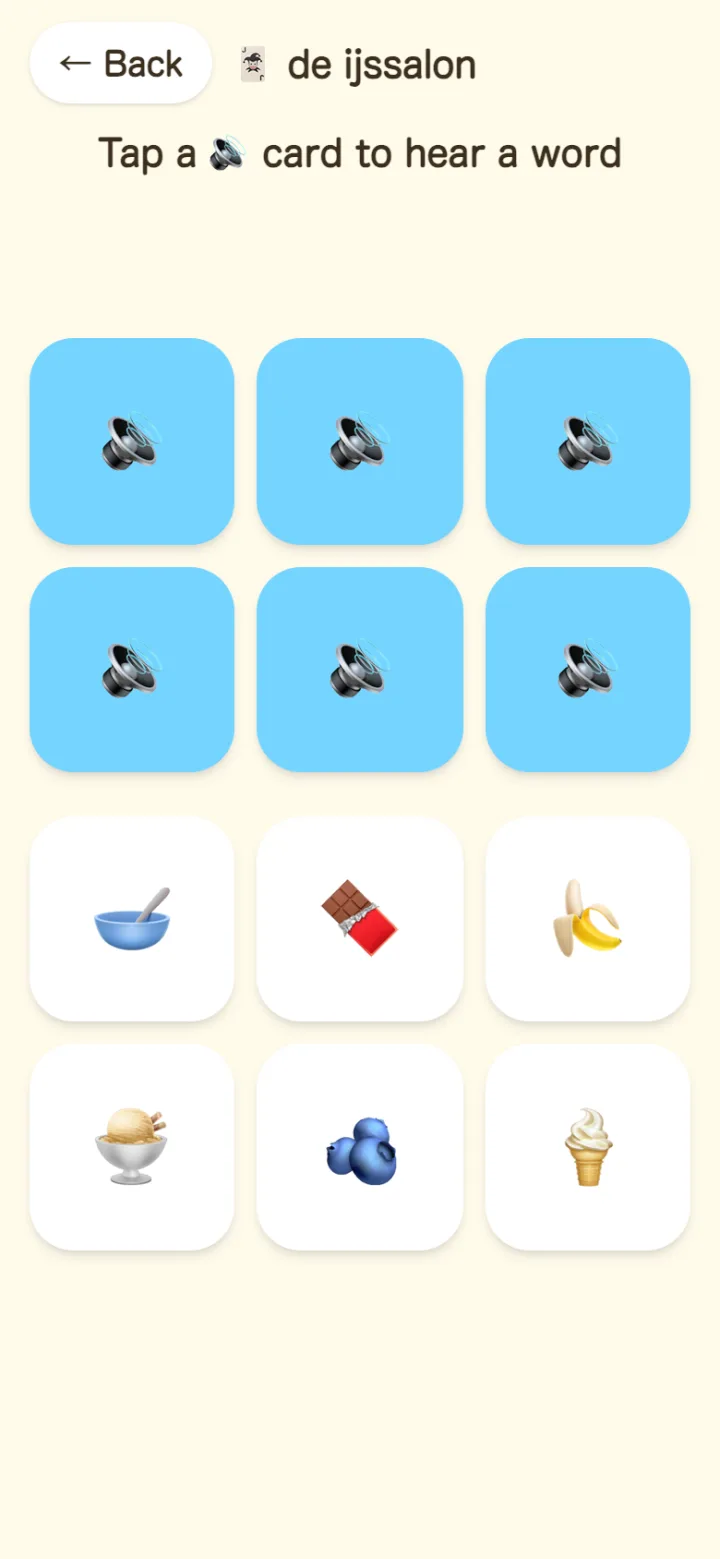
Word pairs: sound cards on top, pictures below
Games

Games that bring words back

Word pairs, find-it and letter games, plus a short practice each day that brings back the words that are due.

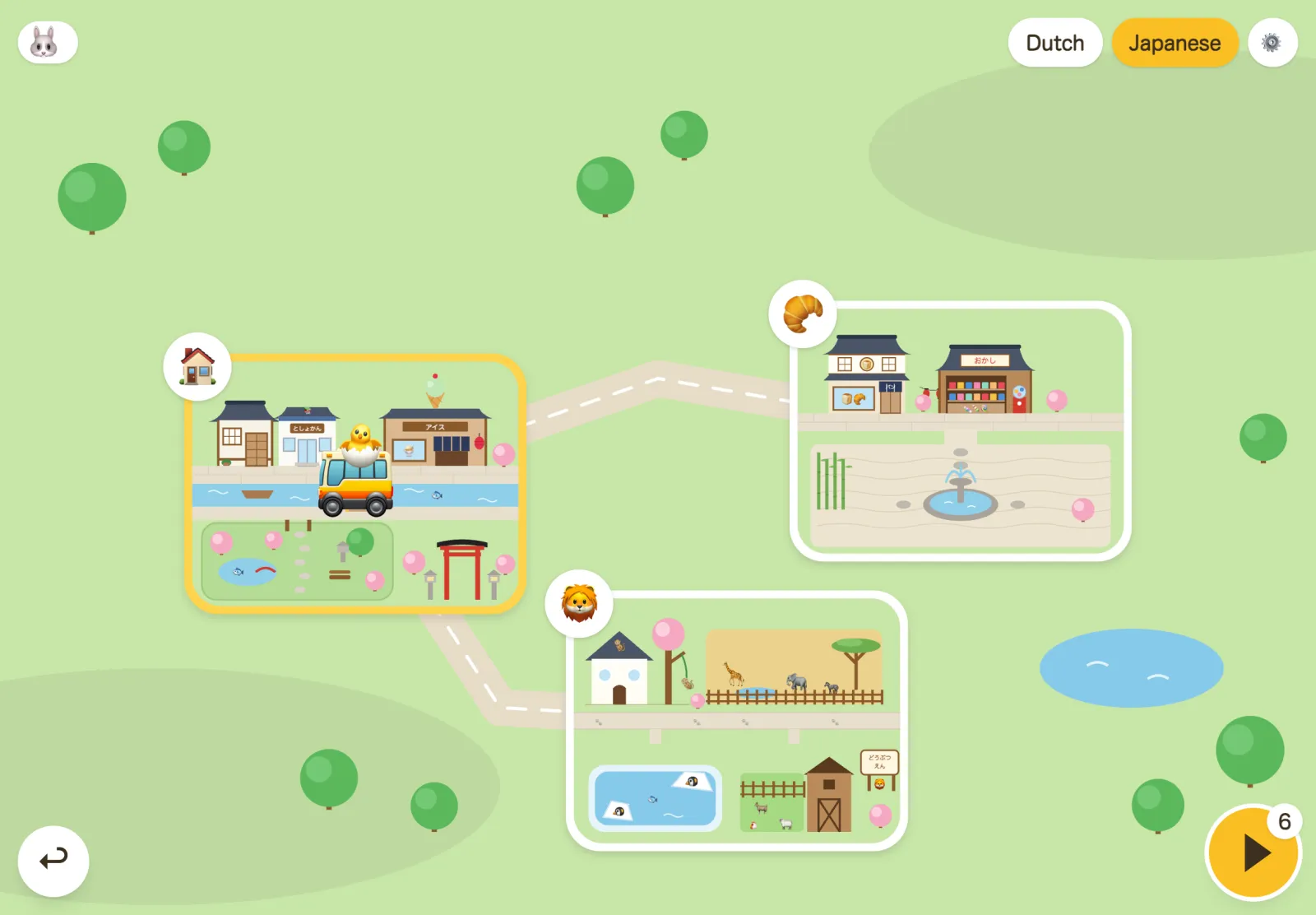
The world map: the home town, a market town with a bakery and a sweet shop, and a zoo town
🚌 Hop on the bus

A whole little world to explore

  • 🏠
    Home townBreakfast with Papa, the park, the ice cream shop and a library full of stories.
  • πŸ₯
    Market townBe the baker and the sweet shop keeper.
  • 🦁
    Zoo townFeed the monkeys, the penguins and the animals on the farm.
  • πŸ”€
    Letters, tooA letter wall says each letter's sound, with a word your child already knows. Hiragana for Japanese.
πŸ”¬ Why it works

Built on how young children learn words

Piyoka isn't flashcards with a cartoon on top. Each part of it follows something researchers have found about how young children learn and remember words.

πŸ“–

The same story, again

In a study of 3-year-olds, children who heard the same story three times learned and kept new words better than children who heard three different stories with the same words.

In Piyoka: stories and places come back, and they're familiar every time.

Horst, Parsons & Bryan (2011), Frontiers in Psychology

πŸ“…

A little, over several days

Two-year-olds said new words better when they met them across several days than all at once. Spacing helped 3-year-olds remember, too.

In Piyoka: a short daily practice brings each word back just as it's about to be forgotten.

Childers & Tomasello (2002), Developmental Psychology; Vlach, Sandhofer & Kornell (2008), Cognition

🧠

Remembering beats re-seeing

Preschoolers remembered new names far better when they practised recalling them than when they just saw them again. In 4 and 5-year-olds, recalling new words helped them remember both the sound and the meaning.

In Piyoka: hear a word and find its picture, or build it from letter tiles.

Fritz, Morris, Nolan & Singleton (2007), Quarterly Journal of Experimental Psychology; Leonard & Deevy (2020), JSLHR

πŸ—£οΈ

Saying it out loud

In studies of 5-year-olds, children remembered the names of pictures better when they said them aloud than when they only looked or listened.

In Piyoka: in every conversation, the child hears a reply and then says it.

Icht & Mama (2015), Journal of Child Language

🏑

Help in their own language

In a study of Spanish-speaking preschoolers learning English, children learned more English words when new words were also explained in Spanish.

In Piyoka: every screen and every word meaning is in your child's home language.

Lugo-Neris, Jackson & Goldstein (2010), LSHSS

πŸ”€

Letters by their sounds

A review of 38 experiments found that teaching letter sounds step by step helps children learn to read, most of all in kindergarten and first grade.

In Piyoka: the letter wall says each letter's sound and shows a word that starts with it.

Ehri, Nunes, Stahl & Willows (2001), Review of Educational Research

What makes an app educational?

Researchers who looked at what children learn from apps came up with four questions to ask. We designed Piyoka around them.

Hirsh-Pasek et al. (2015), Psychological Science in the Public Interest

πŸ‘† ActiveKids tap, choose, build and serve, rather than just watch.
🎯 EngagedNo ads, no pop-ups, nothing pulling them out of the game.
🍦 MeaningfulOrdering ice cream and buying bread, not lists of words.
πŸ’¬ SocialConversations with the people in town. Even better with you sitting next to them.

These studies are about how children learn in general. Most were small lab studies, and none of them tested Piyoka itself. We use them as a guide to how we build it.
🌍 Any direction

Three languages, six courses

Each language works both as your home language and as the one to learn. Several children can share a device, and each can learn more than one language.

🌷
NederlandsA canal town
⇄
πŸ’‚
EnglishA double-decker town
⇄
🌸
にほんごA torii-gate town
🍦 πŸ₯ 🐧 🌸

The chick is almost ready 🐣

Piyoka is coming soon to iPad, iPhone, Android and the web.

Back to the top ↑